GPT Models: Generalized Intelligence at Scale

Defining GPT Architecture
Direct Answer: GPT (Generative Pre-trained Transformer) is OpenAI’s premier family of large language models, engineered for universal reasoning and high-throughput content synthesis, capable of adapting to diverse creative roles—from textual narrative building to complex campaign brainstorming—with industry-leading logic and data-processing capabilities.
The Adaptability Bottleneck: Why Specialized Models Struggle
Many generative tools are optimized for specific outputs, such as image synthesis or video rendering, but they often falter when tasked with the "in-between" work—planning, logical sequencing, and cross-departmental media alignment. If a model lacks generalist intelligence, it cannot interpret the broader project goals when performing individual creative tasks, leading to outputs that may look polished but lack the strategic "glue" required for a professional project.
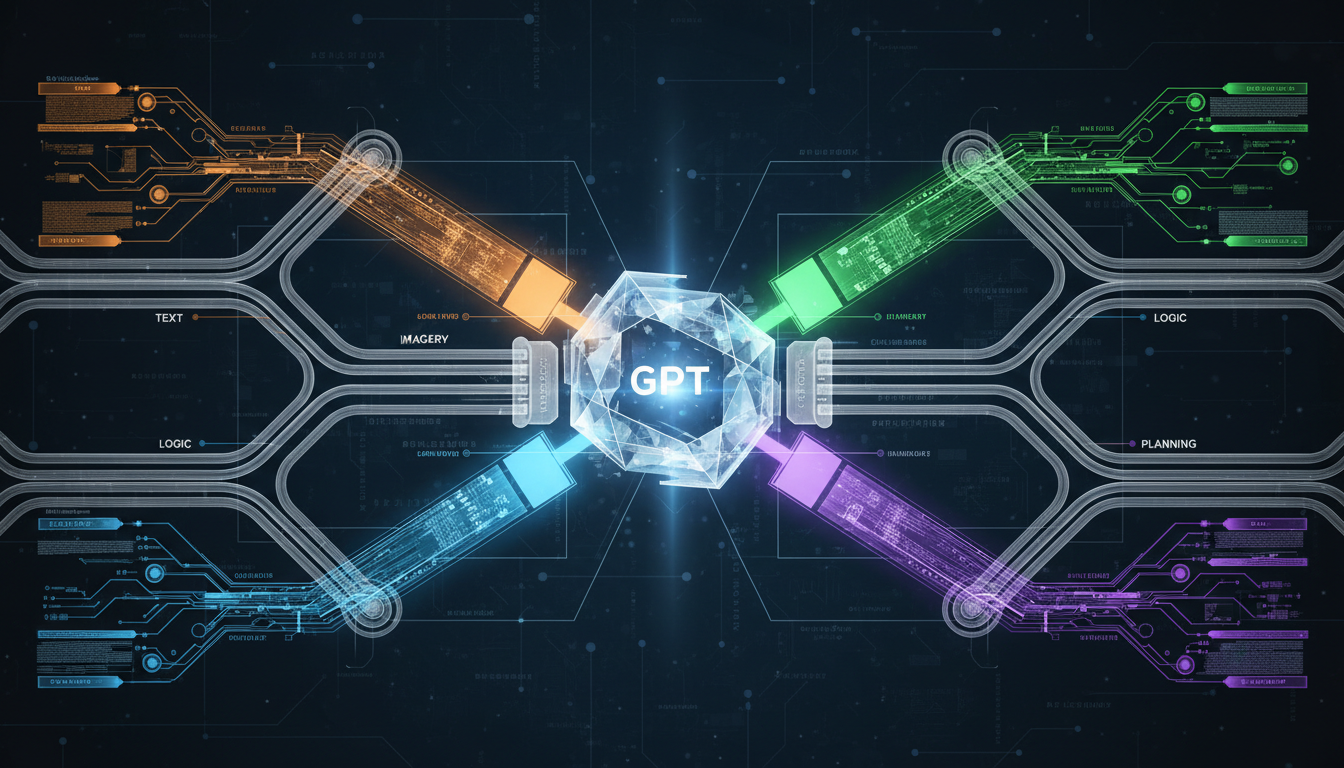
GPT resolves this by utilizing an expansive transformer architecture trained on a massive, diverse corpus of human knowledge. Because the model is exposed to narrative, layout principles, and structured data simultaneously during its training phase, it can pivot its reasoning style instantly. This allows for complex operations—such as converting a rough user-story into a visual spec, or drafting a campaign plan based on a dataset—with the adaptability required for high-velocity media environments.
Core Use Cases for GPT Integration
The GPT family enables three high-value workflows for creative teams:
- Versatile Content Synthesis: Seamlessly pivot from drafting technical production documentation to generating creative ad copy, ensuring that every piece of collateral maintains a unified brand voice and logical consistency.
- Logical Workflow Automation: Utilize GPT’s reasoning capabilities to manage complex project logic, such as automating the steps between a design prompt, a feedback review, and a final production commit.
- Dynamic Asset & Data Analysis: Rapidly analyze creative project datasets, parse layout requirements for visual consistency, or translate complex user requirements into structured, actionable production tasks.
Technical Constraints of Generalist Models
While GPT provides unparalleled adaptability, users must consider the model's specialized operational boundaries:
- Contextual "Drift": Because the model is designed to be highly versatile, it can occasionally "drift" from specific instructions if the prompt structure is too open. Successful implementation requires clear, high-constraint prompt logic to anchor the model’s reasoning to your specific creative parameters.
- Resource-to-Utility Ratio: GPT’s generalist nature is its strength, but for ultra-niche, hyper-specialized visual rendering, it is best utilized as a manager or planner that routes instructions to specialized nodes (like Image Generators or Upscalers), rather than performing those tasks itself.
Why Choose LinkfilmAI for GPT?
We integrate GPT’s reasoning engine directly into your node-based workspace, bridging the gap between raw data and creative execution.
Instead of treating your AI as a separate, external step, LinkfilmAI connects your GPT nodes directly to your image, video, and audio generation pipelines. You can route your parsed research documentation, layout briefs, or structured project notes straight into your visual generation nodes, ensuring your production process is driven by data-backed, versatile intelligence.