

3D Camera Control: Maintaining Geometric Coherence

Defining Volumetric Camera Control in Generative Spaces
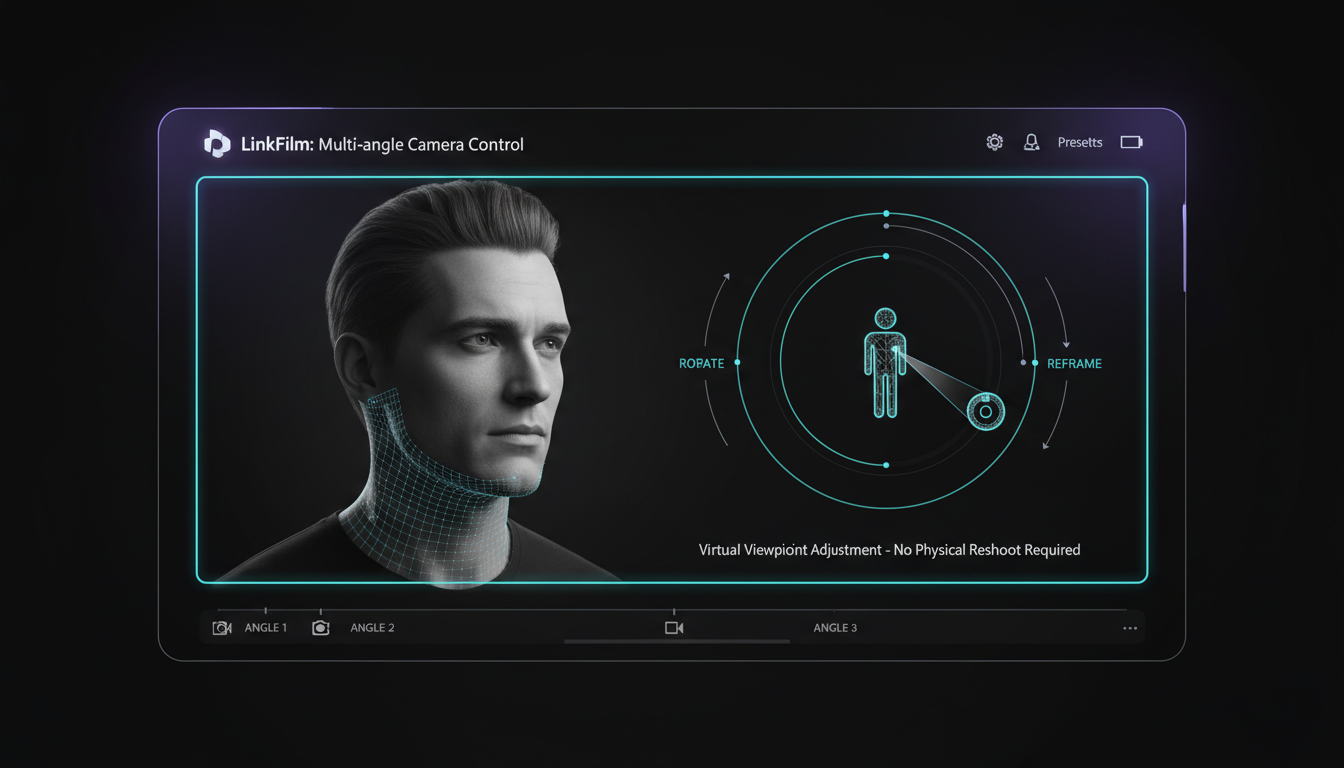
Direct Answer: Multi-angle Camera Control is a spatial-rendering AI technology that generates new camera perspectives of a subject from a single source image. By mapping the underlying 3D geometry of the 2D asset, the system allows creators to rotate, tilt, reframe, and zoom the camera viewpoint while keeping the core colors, textures, and features of the original subject perfectly consistent.
The Perspective Shift Bottleneck: Why Standard Rendering Fails
Traditional generative tools operate on a stochastic, "one-shot" generation model. When you ask them to rotate a character or a product, they don't move a camera; they generate a completely fresh image from scratch. This process creates massive "latent drift," changing the subject's clothes, facial features, or product dimensions arbitrarily.
To achieve production-grade quality, the generation workflow must move from random pixel generation to coordinate-driven camera positioning. By locking onto the volumetric properties of your base asset, the system treats your image like a physical 3D object, calculating exact lighting and shadow recalculations as the camera swings around the target axis.
Creative Workflows Requiring Multi-angle Synthesis
Volumetric viewpoint control unlocks significant speed and flexibility across several creative pipelines:
- E-Commerce Showcases: Take a single, static smartphone photo of a shoe or watch and generate a uniform, multi-angle asset pack—including low-angle, top-down, and side-profile views—for a consistent storefront design.
- Consistent Character Reference Sheets: Produce accurate character views from multiple rotating perspectives, streamlining pre-production timelines for games, animation, and storyboarding.
- Architectural & Spatial Visualizations: Move the virtual lens through interior design frames or building layouts to explore different perspectives of a room without manual 3D remodeling.
Computational Boundaries of Real-Time Viewpoint Generation
- Slight Text and Fine-Detail Shearing: When rotating an asset past extreme $180^\circ$ boundaries, complex typographic logos or minute textures can experience minor geometric estimation errors.
- Higher Processing Overhead: Volumetric depth rendering requires substantial GPU processing power compared to flat, 2D editing pipelines.
Why Choose LinkfilmAI Camera Angle Control
LinkFlimAI completely rejects black-box generation by giving creators precise, manual dials to navigate virtual camera movements directly on an open canvas.
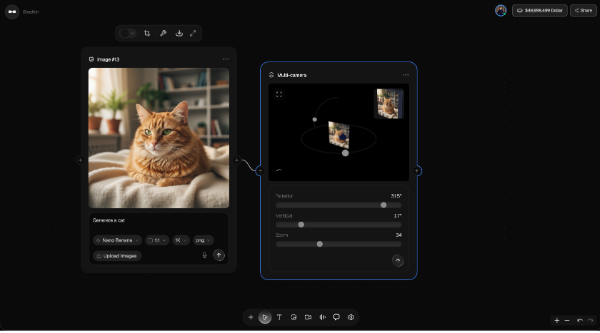
- Interactive Node-Based Control: LinkFlimAI features a dedicated cameraAngleNode directly on your canvas workspace. Instead of typing prompts and hoping for the best, you manually slide physical parameters to configure exact values for Rotation, Vertical tilt, and Zoom.
- 3D-Style Previews from 2D Assets: The engine converts simple, flat 2D images into interactive, perspective-accurate visual layouts.
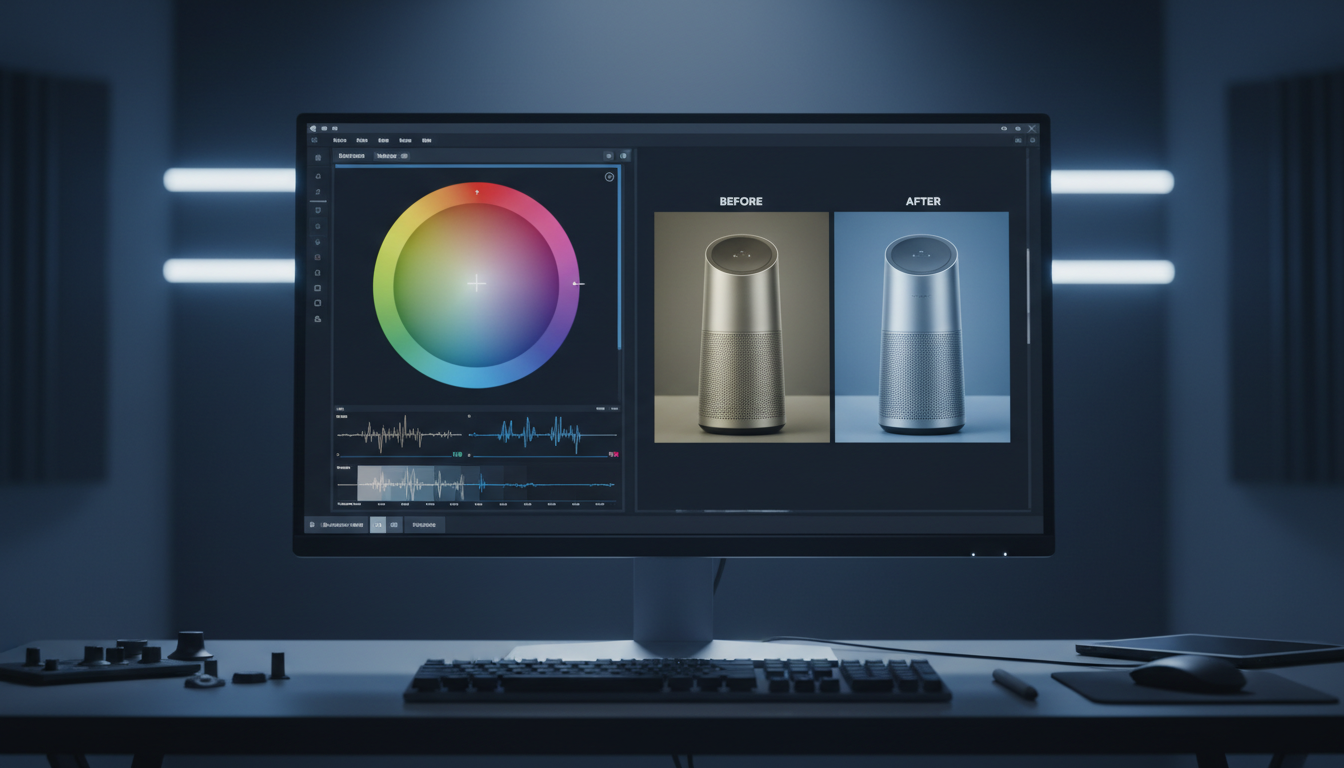
- Zero-Entropy Consistency Engine: While standard tools "hallucinate" new faces or clothing textures during rotation loops, LinkFlimAI maintains a strict structural lock on your subject's physical features, lighting grids, and surface colors across every generated viewpoint.

.png)


