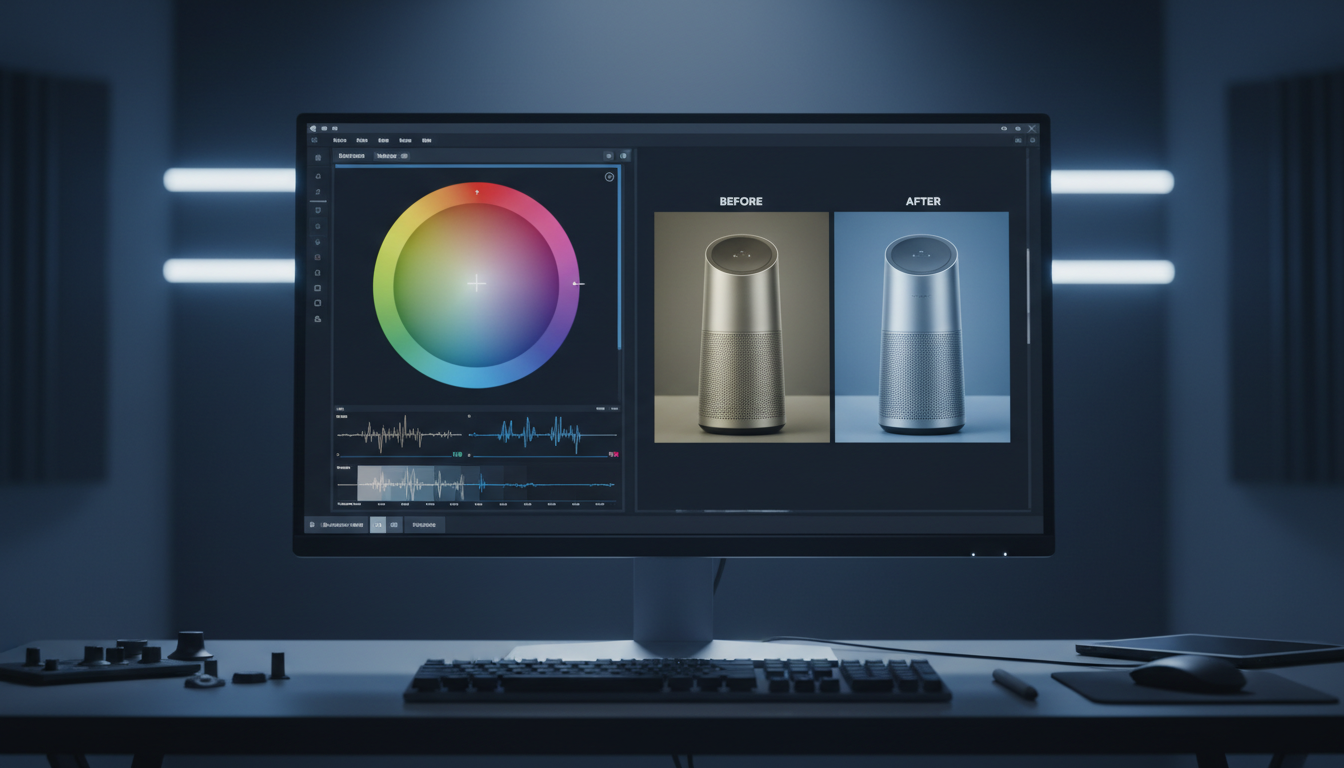
AI Image Upscaling: Reconstructing High-Frequency Detail
.png)
High-Resolution Reconstruction: Understanding Semantic Upscaling
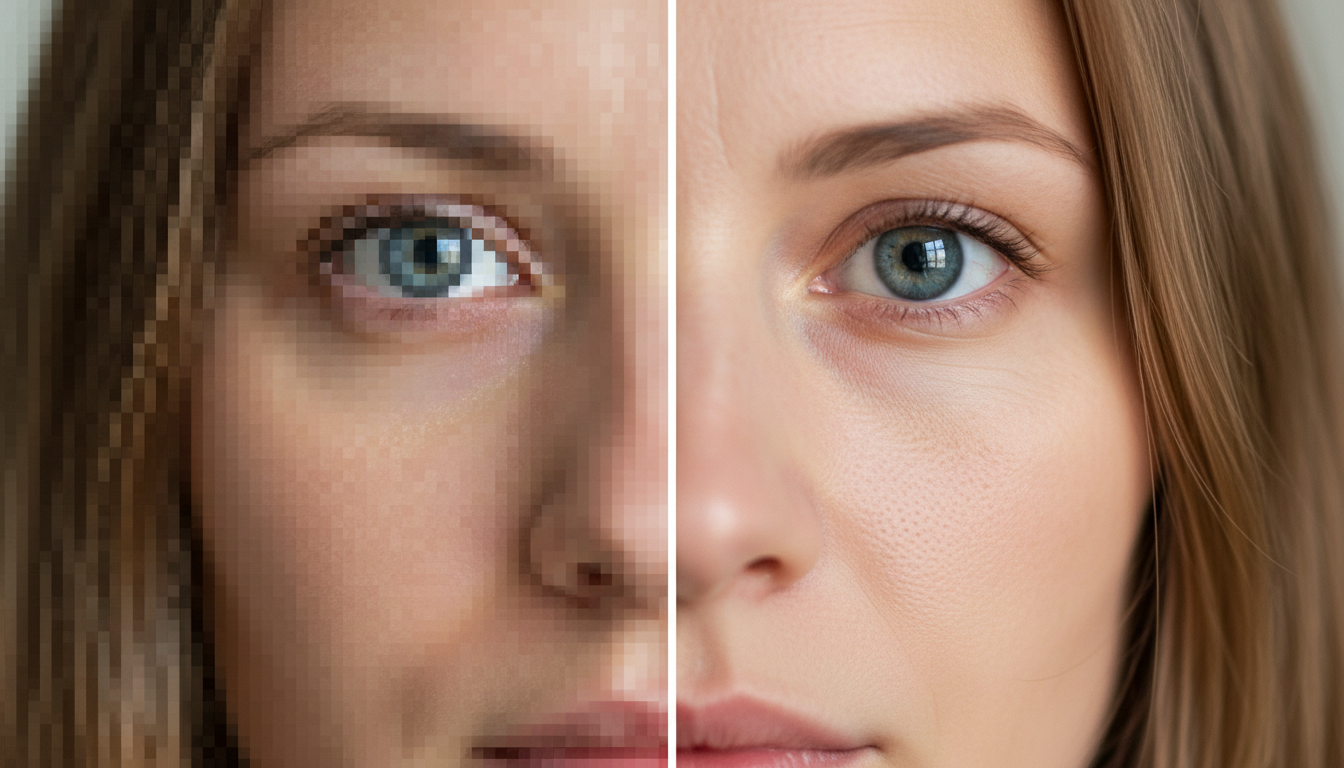
Direct Answer: AI Image Upscaling is a neural reconstruction technology that increases the resolution and pixel density of an existing image. Instead of duplicating pixels to fill a larger frame, a semantic upscaler analyzes the shapes, textures, and geometry within the asset, mathematically generating fresh, high-frequency details to restore edge sharpness and fine-grain clarity.
The Pixel Duplication Problem: Why Legacy Interpolation Fails
Standard editing applications use legacy interpolation math (such as bilinear or bicubic scaling) to resize images. When scaling up an asset, these algorithms simply look at adjacent pixels and duplicate them to fill the new dimensions. The structural result is a "soft" image that looks artificially stretched, blurry, and out of focus.
To achieve production-grade sharpness, the scaling process must transition from mathematical duplication to semantic interpretation. By utilizing a geometry-aware model, the upscaler recognizes what it is looking at—whether it is human skin, metallic surfaces, or fabric textures—and reconstructs those specific material details natively, preserving the crisp edges required for professional outputs.
Core Use Cases of AI Image Upscaling
Adding high-fidelity upscaling to your production workflow solves several distinct pipeline challenges:
- Post-Crop Detail Recovery: Restore pristine crispness to highly targeted crops (such as isolating a single subject from a wider scene) before sending the final composition to print or downstream ad formats.
- Pre-Render Asset Standardization: Bring diverse, low-resolution user uploads or draft generations up to uniform, high-definition standards before feeding them into secondary relighting or editing nodes.
- Legacy Archival Enhancements: Breathe new life into compressed, historical, or low-budget photography assets, instantly upgrading them to meet modern high-resolution screen parameters.
Computational Boundaries and Artifact Amplification
While highly advanced, neural upscaling involves specific technical limitations:
- High Processing Overhead: Reconstructing fine-frequency detail and mapping complex geometry requires significant GPU compute resources, resulting in higher latency than flat, legacy pixel stretchers.
- The Noise-to-Detail Misinterpretation: If your input file contains extreme digital noise, heavy compression, or blurry artifacts, unguided upscalers can occasionally misinterpret those errors as intentional structural details, generating unwanted visual hallucinations.
Why Choose LinkfilmAI Image Upscaler?
Standard platforms treat upscaling as an automated, one-size-fits-all process with zero manual control. LinkFlimAI integrates upscaling directly onto your connected canvas, giving you granular, professional dials to guide the reconstruction engine:
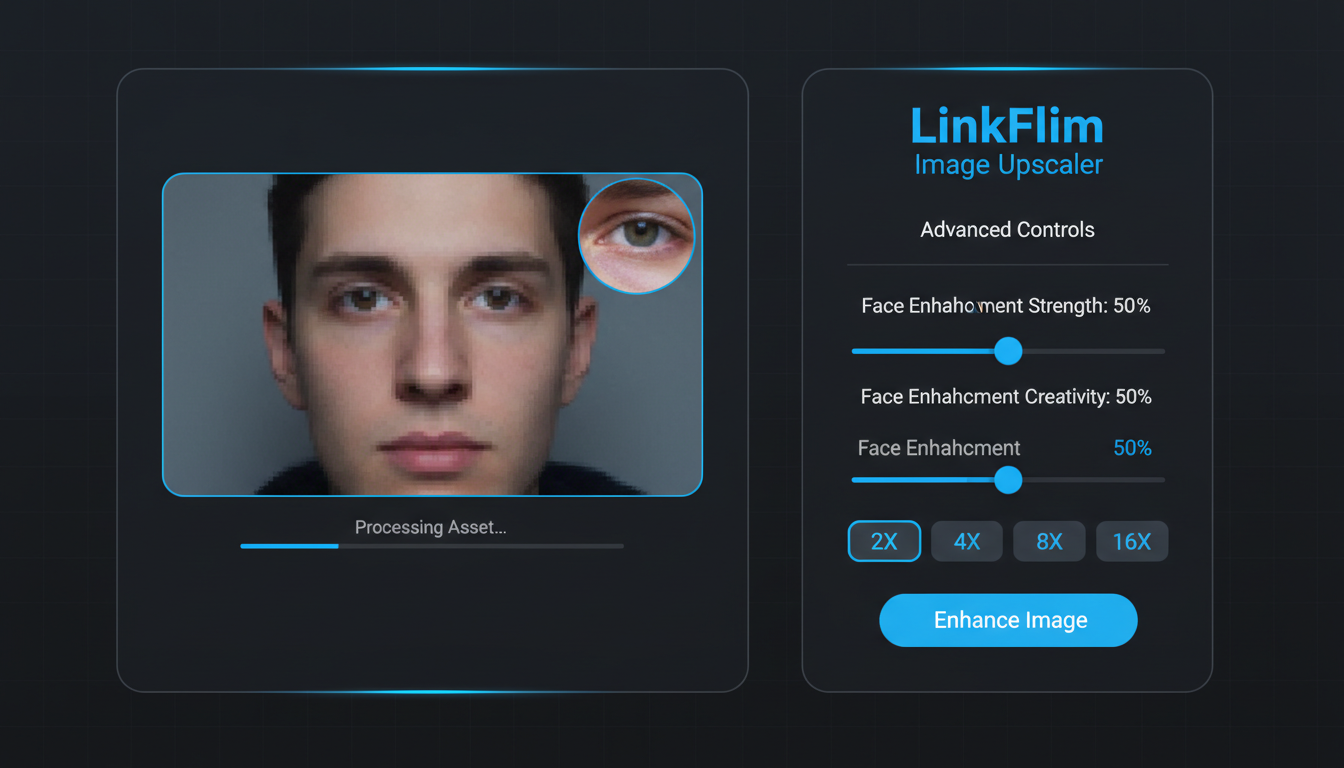
- Granular Magnification Chips: Instantly lock in your target resolution parameters with explicit, hardware-optimized scaling increments of 2X, 4X, 8X, and 16X.
- Targeted Face Enhancement Sliders: Take complete control over portrait restoration. Adjust the Face Enhancement Strength to perfectly sharpen features, and balance it with Face Enhancement Creativity to control how much fresh, natural detail the AI introduces.
- Unified Pipeline Connectivity: LinkFlimAI is built on an open node canvas. Your upscaling node connects directly to manual crop outputs, generator modules, and export settings, allowing you to scale, refine, and download clean high-definition files in a single, frictionless sequence.